The Paradox of EV Braking: Wear vs. Corrosion
In conventional combustion cars, friction brakes are used hundreds of times each trip, perpetually cleaning the cast-iron rotor surface of surface rust. In an electric vehicle, regenerative motor braking absorbs up to 90% of routine stopping energy, converting kinetic motion back into stored battery power.
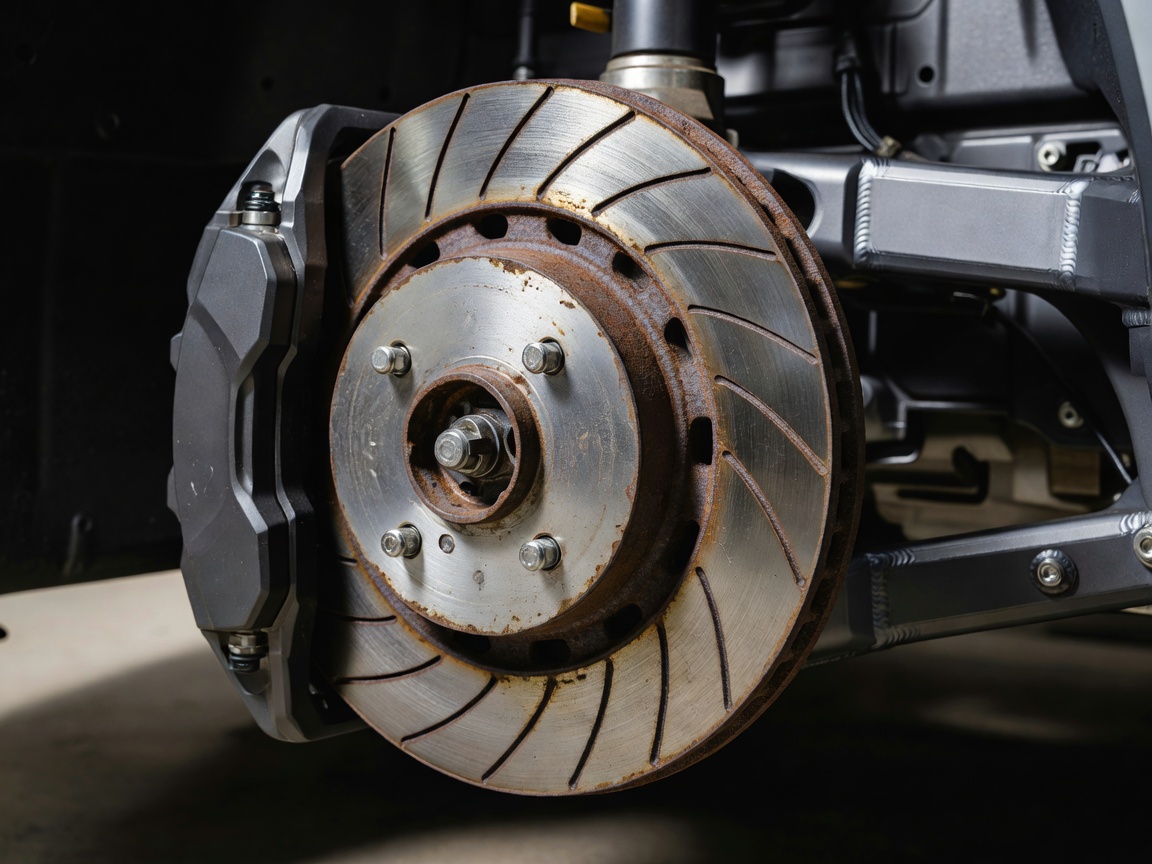
The ironic consequence is that physical brake pads and rotors are underutilized. When exposed to Scandinavian magnesium chloride and sodium road brines, salt sits stagnant on rotor faces and inside caliper guide pins. Over several winter months, calipers seize, guide pins stick, and friction surfaces develop deep pit corrosion.
The Weekly Maintenance Stop
Once a week in an empty, safe location, switch regenerative braking off or select Neutral at moderate speed and firmly depress the brake pedal. This engages the mechanical pads, scraping away salt film before it eats into the rotor substrate.
Suspension Bushings and High Curb Weight
A mid-sized electric SUV typically weighs between 2,100 kg and 2,600 kg—considerably more than its internal combustion predecessor. That constant gravitational mass places heightened strain on lower control arm bushings, ball joints, and anti-roll bar end links.
When navigating frost-heaved Scandinavian asphalt or uneven cobblestones, suspension components experience sustained fatigue. Annual chassis inspections by a technician familiar with EV high-voltage jacking points are mandatory to prevent catastrophic joint failure.